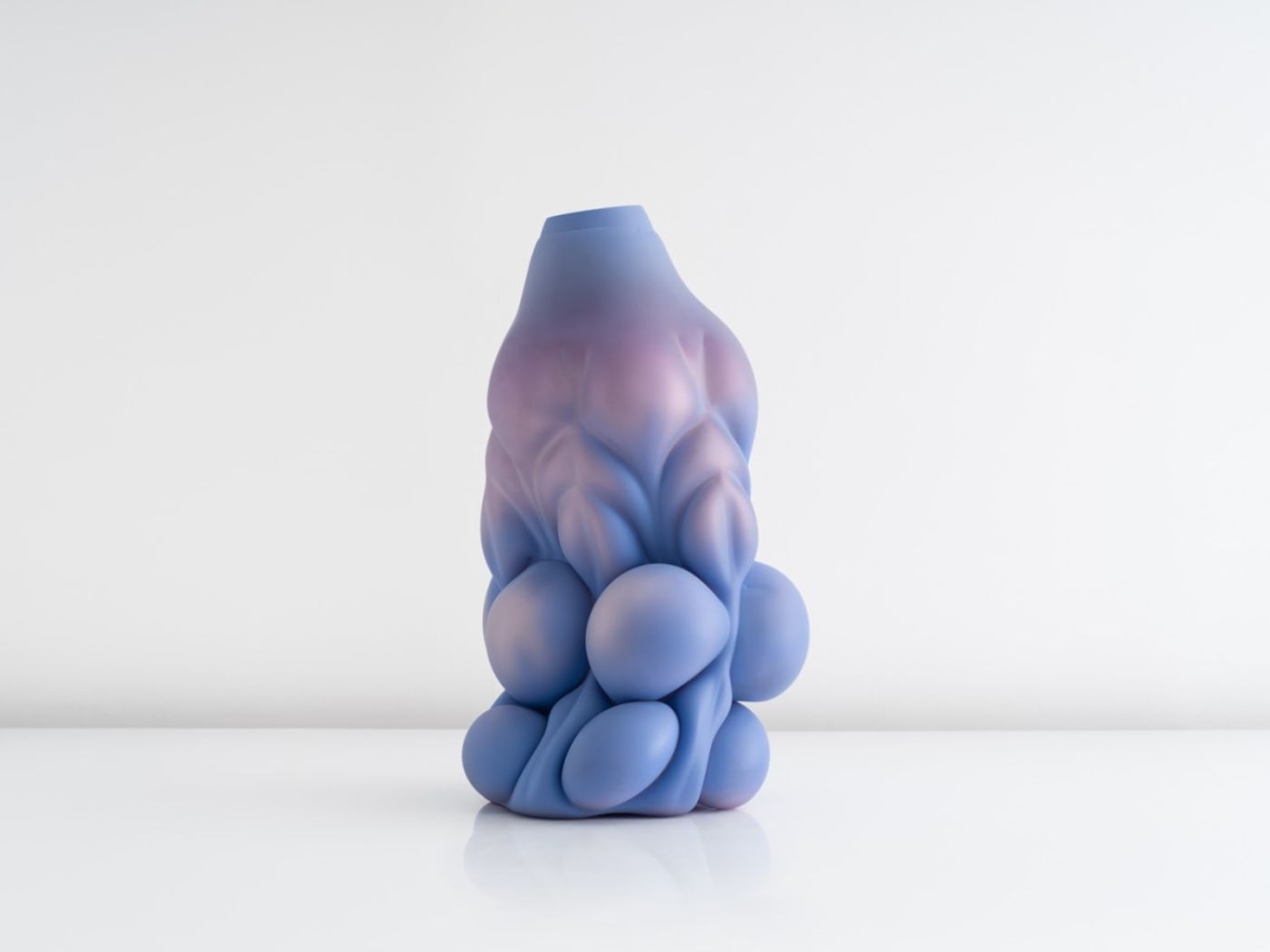

Within the language of contemporary object-making, Hanna Hansdotter occupies a distinct territory—one where glass is liberated from elegance and allowed to become unruly, sensual, and defiantly alive. Her practice challenges the historical expectation of glass as pristine, symmetrical, and obedient, replacing it with forms that swell, distort, bulge, and shimmer with unapologetic presence.
Born in Sweden and rooted in the historic Glasriket (Kingdom of Crystal), Hansdotter draws from one of Europe’s most significant glassmaking traditions while simultaneously disrupting it. Educated through technical craft institutions before graduating from Konstfack University of Arts, Crafts and Design, she developed a vocabulary that merges discipline with rebellion


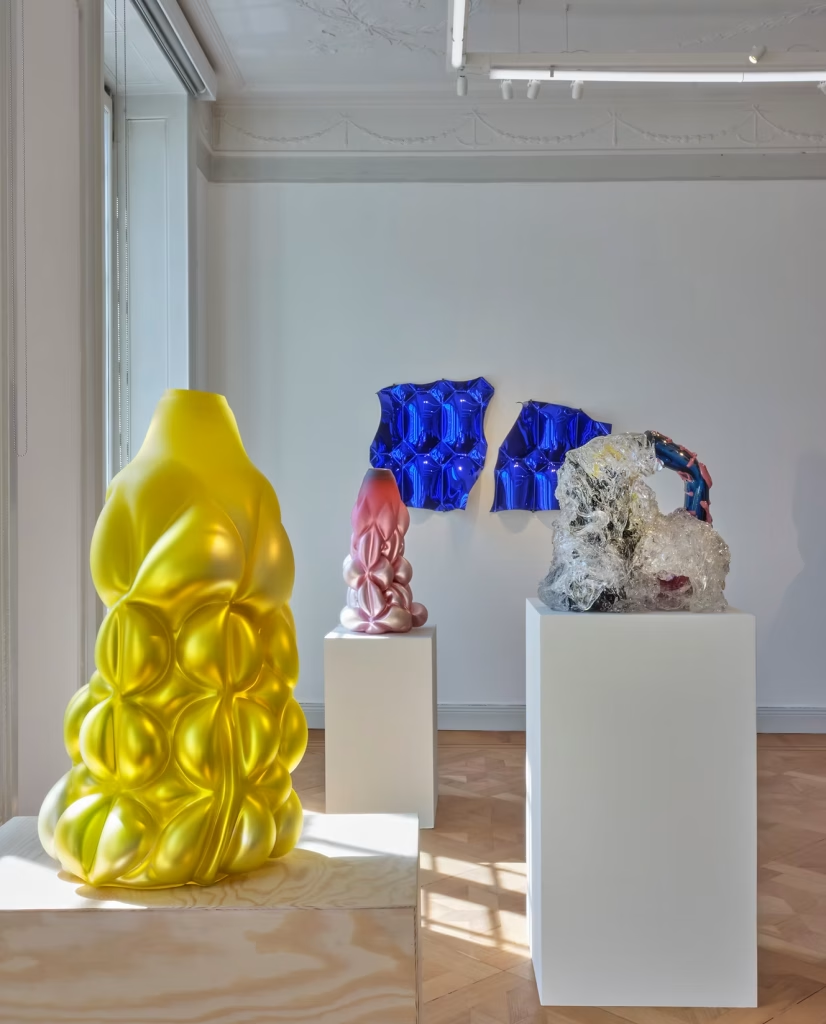
Her sculptures often appear caught between states: liquid and solid, baroque and brutalist, ornamental and industrial. Molten glass is pushed into rigid iron frameworks, where pressure, gravity, and heat generate surfaces that seem to ooze beyond containment. The result is deeply psychological—objects that feel bodily, intimate, and strangely sentient.


There is a seductive tension in Hansdotter’s work. Mirror finishes and iridescent skins invite desire, while warped silhouettes resist domestication. These are not passive vessels or decorative accessories; they are confrontational presences. They ask to be viewed not as design alone, but as sculpture charged with attitude.

Her aesthetic has often been described as “punk baroque”—an apt phrase for work that fuses ornament with disruption, excess with resistance. Yet beyond labels, Hansdotter’s real achievement lies in making glass emotional again. She transforms a historically refined material into something visceral, unstable, and contemporary.

In Hansdotter’s hands, glass does not preserve stillness. It remembers movement.